
Blog

Options for Funding Long-Term Care Expenses
Few things can derail your estate plan as quickly as unanticipated long-term care (LTC) expenses. Most people will need some form of LTC — such as a nursing home or an assisted living facility stay — at some point in their lives. And the cost of this care is steep.

Taxes on Real Estate Gains
Let’s say you own real estate that has been held for more than one year and is sold for a taxable gain. Perhaps this gain comes from indirect ownership of real estate via a pass-through entity such as an LLC, partnership or S corporation. You may expect to pay Uncle Sam

Did you choose the wrong successor?
For many business owners, choosing a successor is the most difficult task related to succession planning. Owners of family-owned businesses, who may have multiple children or other relatives to consider, particularly tend to struggle with this tough choice. What’s worse, many business owners’ initial picks for successor don’t work out.

The Financial and Nonfinancial Skills CFOs Should Have
Is your company planning to hire a new CFO? A recent survey found that hiring managers look for more than financial acumen when vetting CFO candidates. In fact, only 38.5% of CFOs at Fortune 500 and S&P 500 companies were licensed CPAs in 2023, according to executive recruiting firm Crist

New Final IRS Regulations for Inherited IRAs
A tax law change in 2019 essentially ended “stretch IRAs” by requiring most beneficiaries of inherited IRAs (other than a spouse) to withdraw all of the funds within 10 years. Since then, there’s been confusion surrounding inherited IRAs and the so called “10-year rule” for required minimum distributions (RMDs). That

Remember Foreign Assets in Your Estate Plan
Failing to address any foreign assets you possess in your estate plan can cause unexpected outcomes. The good news is that with the help of an experienced estate planning advisor, you can structure the ownership of your foreign assets according to the laws of the U.S. and the country where
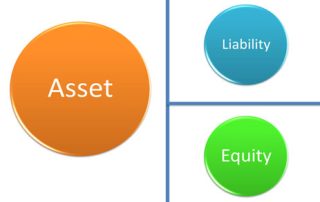
Bookkeeping 101 – Understanding Debits and Credits
Bookkeeping fundamentals are essential to accurate financial reporting. Using software solutions — such as QuickBooks® — can simplify double-entry accounting. However, knowing how the process works can provide reassurance that your business is properly tracking its financial transactions. Explanation of Debit and Credits Assets are items of value that your
Should you change from a C corp to an S corp?
Choosing the right business entity has many implications, including the amount of your tax bill. The most common business structures are sole proprietorships, partnerships, limited liability companies, C corporations and S corporations. In some cases, a business may decide to switch from one entity type to another. Although S corporations can provide substantial

The Satisfaction Equation
Chris West, CPA, PFS Grandma would always tell us kids to “save some money for a rainy day.” Grandma was always very wise in many matters, and being wise with money was no exception. Essentially, Grandma was referring to the three foundational behaviors of building wealth, which are:

What is protected from creditors?
The executors are settling an estate — but the decedent owes money. What can the creditors take and what is reserved for the inheritors? There is no easy answer, and a variety of federal and state laws apply. To start with, retirement accounts that qualify under the Employee Retirement Income